.webp)
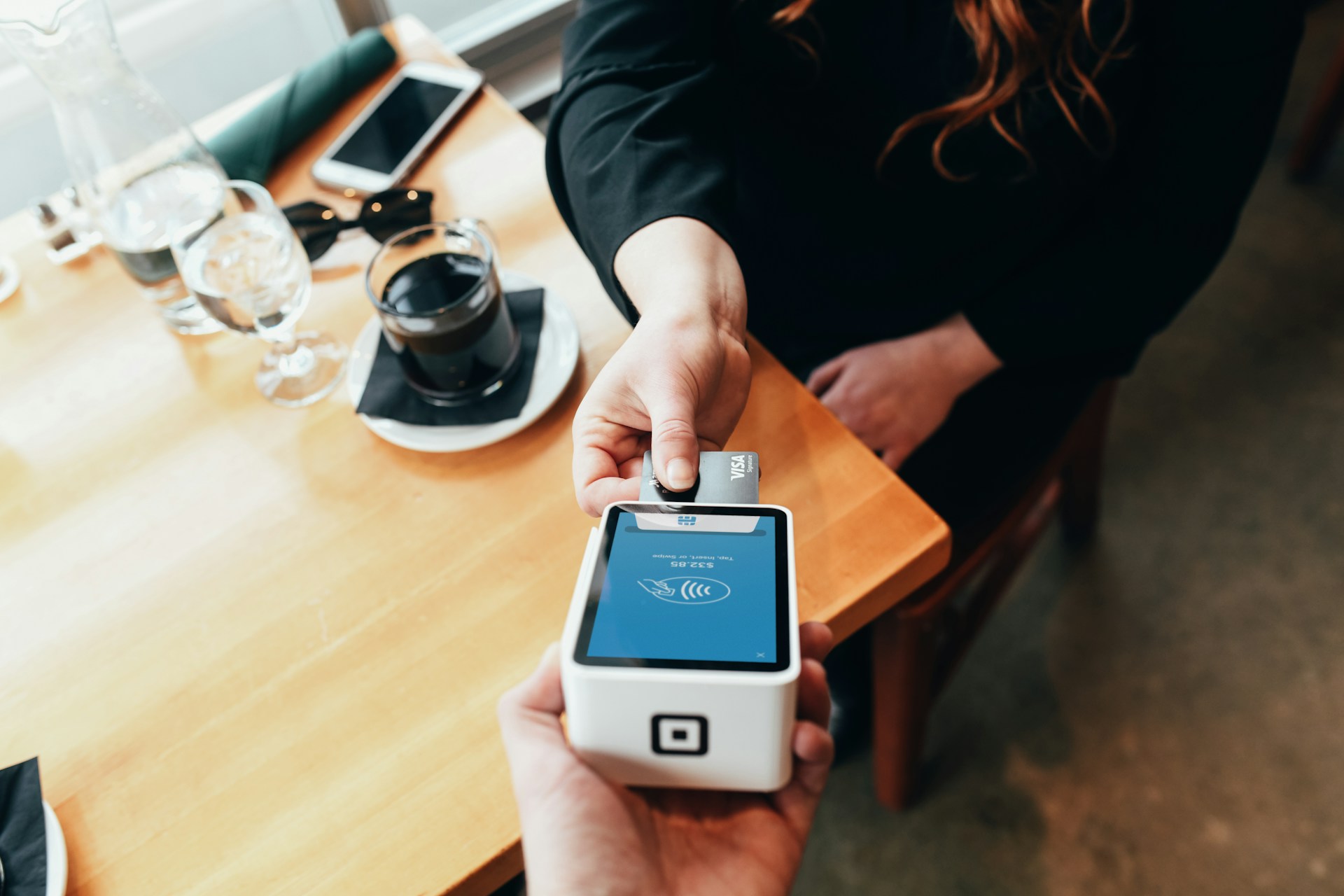
You know that little '1.5% card fee applies" sign at the counter? From 1 October 2026, it's history.
The Reserve Bank has called time on card surcharging across eftpos, Visa and Mastercard, covering debit, prepaid and credit cards. Amex has jumped on board too. The price on the menu becomes the price the customer pays. Full stop.
It's not small change either. The RBA estimates around $1.8 billion in card surcharges gets charged every year, with consumers footing $1.6 billion of it. About 16% of businesses currently surcharge, and that number has doubled since 2022.
Sounds simple. It's not quite. So let's unpack what's actually happening, what it means for your business, and what you should be doing about it before October rolls around.
What's actually changing
This isn't new legislation. It's the RBA changing its own rules.
For over 20 years, the RBA has stopped the card networks (Visa, Mastercard, eftpos) from banning surcharges. That's the only reason businesses have been allowed to add a card fee in the first place. From 1 October, the RBA removes that protection, and the card networks are expected to ban surcharging through their own terms and conditions almost immediately.
So technically, surcharging won't be "illegal." But if you keep doing it, you'll be breaching the card schemes' rules. You can be reported, fined, and if you keep pushing it, they can cut off your ability to accept Visa or Mastercard altogether. For most businesses, that could be game over. So in practice it means no more surcharges.
Note: This only applies to card payment surcharges. Weekend surcharges, public holiday surcharges and booking fees are untouched. And you can still offer a discount for cash if you like. Though good luck making a 12 cent discount on a $6 coffee feel exciting.
Interchange fees?
At the same time as the surcharge ban, the RBA is cutting the interchange fees that make up a chunk of what you pay to accept cards.
The big one: the cap on domestic consumer credit cards drops from 0.8% to 0.3%. That's a serious cut. Debit card caps come down too. The RBA puts the total saving to businesses at around $910 million a year, with small businesses expected to benefit most because they tend to pay fees at or near the current caps.
But here's the catch. Commercial and business credit cards? No change. Still capped at 0.8%.
So if you're a cafe and 95% of your transactions are personal cards, you'll see real savings flow through. If you're a B2B business getting paid mostly on company credit cards, you get the surcharge ban without much of the fee relief. Best of both worlds, in reverse.
Foreign-issued cards get their own cap of 1%, but not until 1 April 2027.
Where do the costs go? Into your prices.
Here's the honest version of what happens next.
Accepting cards still costs money. The RBA's own position is that businesses can build those costs into their overall pricing instead of charging them separately. Translation: the fee doesn't disappear, it moves into the sticker price.
So expect prices across the economy to quietly tick up. Your coffee, your haircut, your parts supplier. Some businesses will move before October, some will wait until their next price review, but the maths has to land somewhere.
The other side of that coin? Customers lose choice. Under the old system, you could dodge the fee by paying cash or debit at some venues. Now everyone pays the same price regardless of how they pay, which means cash payers effectively subsidise the credit card crowd. Whether that's good policy is a debate for another day. It's happening either way.
Our two cents
The RBA's version is the tidy one. Here's the bit we think deserves a bit more airtime.
For small businesses, this is a genuine cost shift. The beauty of a surcharge was that it was a cost you only wore when someone actually tapped a card, and you could pass it on at that exact moment. Remove that and card acceptance becomes a fixed cost of doing business that you carry whether you like it or not. For a lot of small operators, that's not a rounding error.
The businesses hit hardest? High volume, low dollar value. Cafes, takeaway joints, bakeries, anyone doing hundreds of small taps a day. When nearly every transaction comes with a card cost you can no longer itemise, the only lever left is the price on the board. Which is why we wouldn't be surprised to see prices at these businesses rise somewhere in the 2% to 5% range. Your morning coffee is probably going to wear some of this.
And here's a curly one. Does this quietly push people back to cash? If card and cash now cost the customer the same at the counter, but cash costs the business nothing at the terminal, some businesses will start sweetening the deal for cash, which they're still allowed to do. Which would be a slightly ironic outcome given how hard the broader system has been steering us away from cash for years.
None of this means the sky is falling. It means the cost hasn't disappeared, it's changed shape, and the businesses that get on the front foot with it will handle it fine.
What you should do before 1 October
1. Find out what you're actually paying. Dig out your merchant statement and look at your card acceptance costs. Plenty of business owners have never looked. Now's the time.
2. Have a chat with your payment provider. The interchange cuts land at the bank and gateway level first, and whether they get passed on to you in full is another question entirely. The RBA knows this, which is why providers will be required to publish their merchant fees and how much of the interchange savings they're actually passing through, with the RBA planning to publicly call out the ones that don't. Use that leverage. Ask the question directly: interchange caps are dropping, what's my new rate? If the answer's underwhelming, get a quote from a competitor. Your bank's merchant facility, Square, Tyro, Stripe, they all want your business.
3. If you currently surcharge, plan your pricing now. Work out what surcharging actually earns you per year, then decide how that gets absorbed. A small across-the-board price adjustment usually beats eating the cost, and it's far better done deliberately in September than in a panic in November.
4. Update your systems. Terminals, POS settings, online checkouts, invoices. Anywhere a card fee gets added automatically needs to be switched off by 1 October. Your terminal provider will likely handle some of this, but don't assume.
5. Know your card mix. If most of your revenue comes in on business credit cards, budget on your acceptance costs staying roughly where they are. If it's mostly consumer cards, push hard on point 2, because there are genuine savings on the table.
In short
From 1 October there is:
- No more card surcharges
- Lower interchange fees on consumer cards
- No relief on business cards
- Card costs baked into prices instead of added at the terminal.
The businesses that come out ahead will be the ones who check their rates, renegotiate where they can, and adjust their pricing on purpose rather than by accident.
Not sure how this lands for your setup? Give us a yell.